


How Much Does a Speeding Ticket Raise Your Insurance?
Stop the ticket before it sticks.
In several states, a course can dismiss the ticket or keep its points off.
Quick answer
- Usually, yes: once a speeding conviction lands on your driving record, your insurer can raise your rate, most often at your next renewal.
- How much depends on your state and insurer; in North Carolina, where the state sets surcharges, one insurance point means a 40 percent increase and two points mean 55 percent.
- Your best move is to act before the ticket reaches your record: in several states, a defensive driving course can dismiss the ticket or keep its points off.
Here's the honest version. Paying the ticket is the fastest way to make it someone else's data point, and your insurer is that someone. If your state lets a course stop the ticket from sticking, that's the move. If it's already too late, a course can still soften the hit in some states.
Does a Speeding Ticket Raise Your Insurance?
In most cases, yes. Insurers price risk from your driving record, and a speeding conviction is one of the clearest signals they look for.
It's the Conviction That Counts
The ticket itself doesn't change your rate. The conviction does, once it's reported to your driving record. That gap between ticket and conviction is your window to act. Not sure what counts? Here's what a moving violation is.
Some Small Tickets Get a Pass
A few states soften the blow for minor tickets. North Carolina, for example, generally doesn't add insurance points for a first ticket of 10 mph or less over the limit outside a school zone unless you have another moving violation in the lookback period.
How Much Does Insurance Go Up After a Speeding Ticket?
There's no national number, because most states let each insurer set its own surcharges. North Carolina is the rare state that publishes them.
A Real Example: North Carolina
Under the state's Safe Driver Incentive Plan, set out by the NC insurance department, insurance points translate directly into rate increases:
- 1 point, such as speeding 10 mph or less over a limit under 55: a 40 percent increase
- 2 points, such as more than 10 over at a total speed between 56 and 75: a 55 percent increase
- 4 points, such as more than 75 mph in a zone under 70: a 90 percent increase
Everywhere Else
Expect the increase to depend on how fast you were going, your record, your state, and your insurer's rules. The only way to know your number is to ask your insurer, ideally before the conviction posts.
When Does a Speeding Ticket Show Up on Your Insurance?
Usually at your next renewal after the conviction reaches your driving record, not the day you're pulled over.
Why There's a Delay
The court has to process the conviction, the state has to post it, and your insurer has to pull your record, which typically happens when they prepare your renewal or when you apply for a new policy.
Shopping for a New Policy?
New insurers check your record when you apply, so a recent conviction can show up right away there too. Here's how to check your points before you shop.
How Long Does a Speeding Ticket Affect Your Rate?
It depends on your state and insurer, but plan on years, not months.
The North Carolina Rule
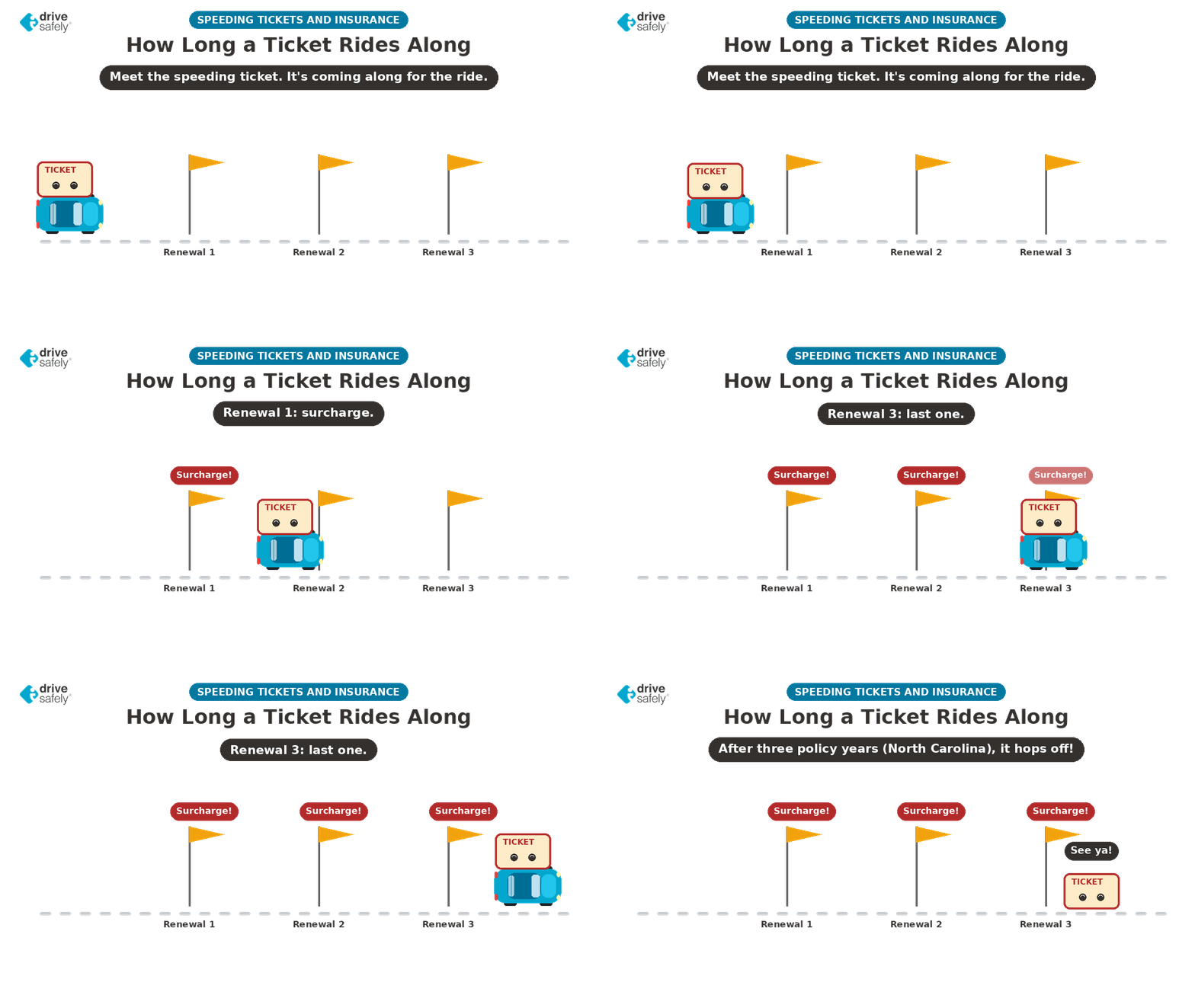
North Carolina applies surcharges for three policy years for most convictions, and for five years for some serious non speeding convictions under its newer rules.
Everywhere Else
Insurers generally look back a set number of years when they rate you. Your record and your insurer decide how long the ticket follows you. See how points affect insurance over time.
Can a Defensive Driving Course Keep a Ticket Off Your Record?
In several states, yes, if you act before the conviction is final and you're eligible. What the course actually does changes by state.
What a Course Does, State by State
- Texas: with court approval, an eligible ticket can be dismissed, once every 12 months. Texas defensive driving
- Florida: electing a basic driver improvement course keeps an eligible ticket's points off your record. Florida traffic school
- Michigan: with an eligibility letter, BDIC keeps the points off and the violation away from insurers, once. Michigan BDIC
- Virginia: some courts dismiss or reduce a ticket after a driver improvement clinic, at the judge's discretion. Virginia driver improvement
- North Carolina: some courts and district attorneys allow a course for dismissal or a reduced charge. NC defensive driving
- South Carolina: courts in Berkeley, Charleston, Dorchester, and Orangeburg counties accept our course to dismiss a ticket's points, case by case. SC defensive driving
The Timing Rule
Every one of these depends on acting early, usually before your court date or deadline. Wait until after the conviction posts, and most of these options close.
What If the Ticket Is Already on Your Record?
You still have options, they're just about softening the impact instead of stopping it.
Point Credits
Some states credit points for a course after the fact: New York's PIRP subtracts up to 4 points from your suspension total, New Jersey removes up to 2, Ohio credits 2, and Indiana credits 4, each on its own schedule. See New York PIRP.
Insurance Discounts
New York requires a 10 percent reduction on liability and collision premiums for three years after PIRP. Elsewhere, discounts are up to your insurer, so ask what they offer before you enroll.
55 or Older?
Mature driver courses can qualify for an insurance discount in many states. See the Ohio mature driver course, for example, and ask your insurer.

How Traffic Tickets Affect Your Insurance Rates - I Drive Safely
That traffic ticket will cost you. Not just the fine but also higher insurance rates. Here's why tickets affect your premium, and what you can do to save.

How Points on your License Impacts Your Insurance Rate
Having points on your license tells the insurance company that you’re a high-risk driver. Learn how this impacts your insurance rates and what to do about it.

How COVID-19 is Changing the Process of Getting a Driver’s License
COVID-19 is changing the process of getting a driver’s license in many states. Here’s what you need to know about getting your license in the coronavirus era.
Looking for more driving resources?
Enter your email for deals, study materials, car maintenance tips, insurance savings, and more.