


How Do I Get a Copy of My Driver Record?

Skip the Line. Keep the Afternoon.
Order your official driving record online.
Quick Answer:
- You can get a copy of your driver record from your state's motor vehicle agency online, by mail, or in person, or order one through a trusted online service without visiting an office.
- Unofficial copies are usually instant and fine for personal review; certified copies are the official version courts, employers, and some insurers require, and they take longer to arrive.
- Your record lists your license status, violations, convictions, suspensions, and accidents, and checking it periodically is the only way to catch expensive errors.
Your driver record, sometimes called a motor vehicle record (MVR), is the state's official record of your driving history. Insurers price your policy off it, employers screen with it, and courts trust it over your recollection. Getting a copy is quick once you know which version you need and where to order it. Here is the whole process.
What Is Actually on Your Driver Record?
What You Will Find
A driver record contains your identifying information, your license number, class, status, and expiration date, plus the history that matters: moving violation convictions, accidents, suspensions, revocations, and completed course credits. Commercial drivers also see the status of any endorsements. How long each entry stays visible varies by state and severity: minor violations typically remain visible for a few years, while serious offenses like DUI can remain for a decade or longer, and in some states, permanently.
What You Will Not Find
Records generally exclude non-moving violations, such as parking tickets, as well as anything unrelated to operating a vehicle. And a common surprise: a completed defensive driving course that never got credited will not appear either, which is exactly the kind of omission you want to catch and fix early.
Which Type of Copy Do You Need?
Unofficial Copies for a Quick Look
If you just want to review your history, an unofficial copy is the way to go. Most states offer it online instantly for a small fee or free, and it shows the same core history without the official stamp. It is perfect for checking that a ticket was recorded correctly or that a course credit was posted.
Certified Copies for Courts and Employers
Courts, many employers, and some insurance and licensing processes require a certified copy, the official version issued and stamped by the state. Certified copies usually arrive by mail and are rarely expedited, so if a court date is on your calendar, order early. When a court wants your record alongside a course certificate, the certified version is almost always the one they mean.
Where Can You Order Your Record?
Your State Agency Online
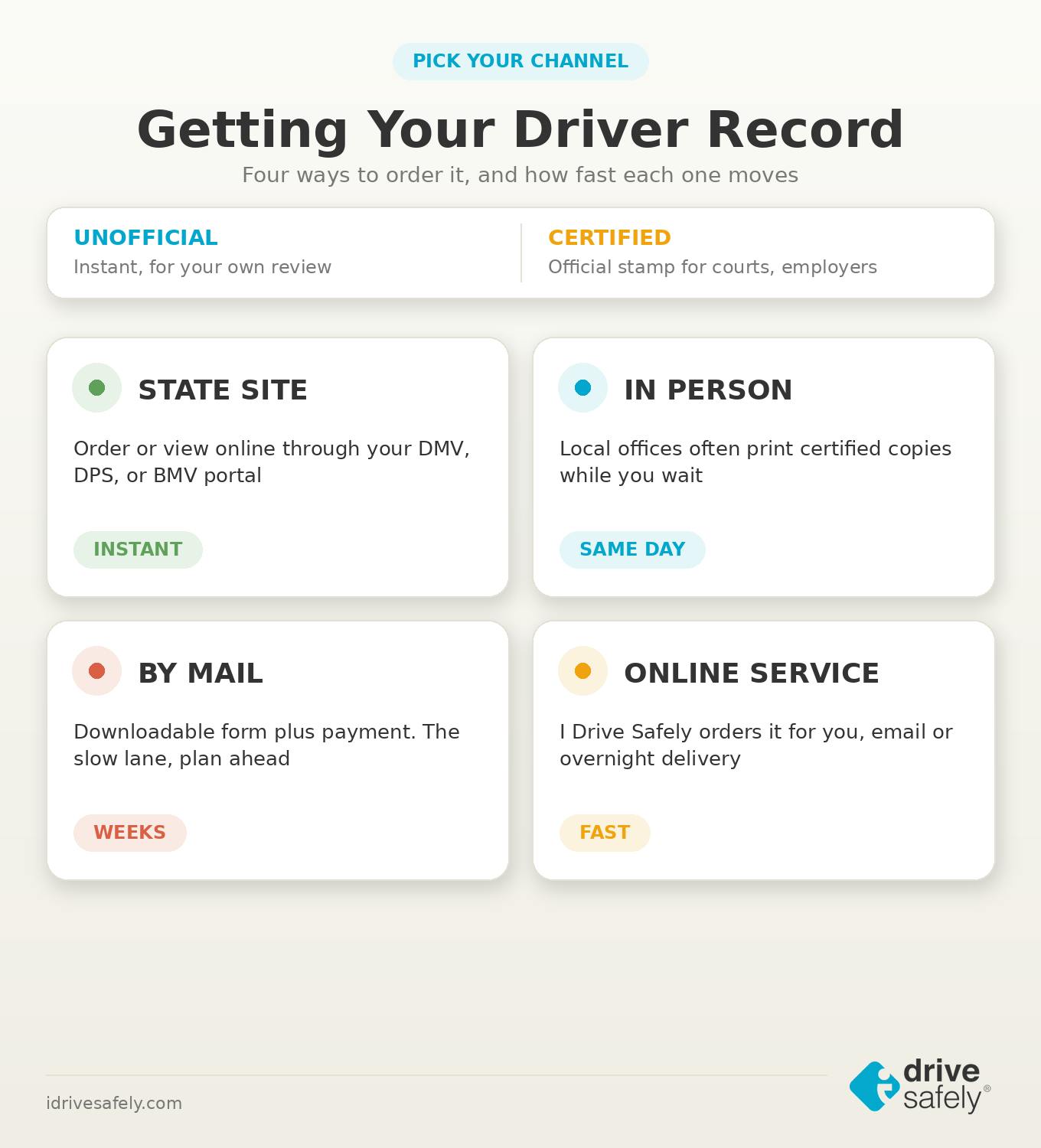
The fastest official source is your state motor vehicle agency's website, where most states let you order or instantly view your record after verifying your identity. California, for example, runs an online driver record request system that prints on the spot. State pages differ in what they need from you, but a license number, date of birth, and sometimes a Social Security number or account login are typical.
By Mail or In Person
Every state still takes requests by mail using a downloadable form, and most fill in-person requests same day at a local office. Mail is the slow lane, often measured in weeks, so treat it as the backup rather than the plan. Bring or include your license information either way, and check whether your specific office handles record requests before making the trip.
Know Exactly What Insurers See. Pull your record today and catch the errors before they cost you at renewal.
Ordering Through a Trusted Service
If you would rather skip the agency entirely, I Drive Safely offers an online driving record service with email delivery, overnight shipping, or free standard shipping, and support available seven days a week. State-specific ordering, like a Texas driver record or a Virginia driving record, takes a few minutes and a few basic details. It is the convenient path when a court or employer deadline is close, and the office line is not an option.
Who Else Can See Your Record?
The Federal Privacy Floor
Driver records are not open books. Federal privacy law restricts who can pull them, and most states require your consent, your license number, or a legally permitted purpose before releasing your information to someone else. Background checks that include driving history still need your authorization.
Insurers and Employers
The two groups most likely to read your record are the ones pricing your premium and the ones handing you keys for work. Insurers review records at renewal and after claims, which is why an error can quietly cost you money for years. Here is more on how points affect insurance once they land.
What Should You Do After You Read It?
Dispute Errors Fast
Records contain mistakes more often than people expect: paid fines listed as outstanding, dismissed tickets still showing, course credits never applied, even someone else's violation keyed to your license. Every state has a correction process, usually involving a form and supporting documents such as a court disposition or completion certificate. The sooner you file, the less the error costs you.
If Points Are the Question
Your record shows what happened. If what you really want to know is what your point total means, how close you are to a suspension, and whether a course can shrink the number, that is its own topic, and this guide to checking your points walks through it state by state, including a state-level example for ordering your Ohio driving record.
Frequently Asked Questions
Can I get my driving record for free?
In some states, yes: unofficial online copies are free or close to it, while certified copies always carry a fee. Your insurance agent can also often share the version they pulled, though it may be an abbreviated or outdated version.
How fast can I get a copy of my driving record?
Unofficial copies are typically instant online. Certified copies usually arrive by mail in days to weeks depending on the state, and in-person requests are often filled the same day, so match the method to your deadline.
Does my driving record show tickets from other states?
Usually, yes. Most states share conviction information through interstate agreements, so an out-of-state ticket typically follows you home to your record. Check your record after any out-of-state citation to confirm how it posted.

7 Surprising Signs of Aggressive Driving
What is the difference between being an assertive and aggressive driver? It's not simply to road rage or not to road rage. Not knowing can increase your insurance costs and possibly endanger lives. Are you constantly over the speed limit? Does yellow mean go faster? There are over 5 million car accidents annually. Know the facts. Drive safely. Enjoy the ride.

Tips To Pass Your DMV Behind-the-Wheel Test
Here are the necessary things you need to know to pass your DMV behind-the-wheel drivers license test.

5 Crazy Cases of Road Rage
We all get heated behind the wheel sometimes, but some drivers have let their anger turn dangerous. Here are five of the craziest road rage incidents we could find.
Looking for more driving resources?
Enter your email for deals, study materials, car maintenance tips, insurance savings, and more.