


Tips for Passing Your Driving School Test
Turn Test-Day Nerves Into Quiet Confidence.
A course that prepares you fully is the best cure for the jitters. →
Nervous about your driving exam? That is completely normal, and it is also the single biggest thing standing between most people and a first-try pass. The exam itself is manageable once you prepare the right way and get your head straight. Here is how to walk in ready instead of rattled.
- Most failures are not about skill: they come from under-preparing, skipping realistic practice, and letting nerves take over.
- Prepare in layers: study the handbook for understanding, learn as a passenger, and go well past the minimum practice hours.
- Manage the day itself: rest, eat, slow down, and know what to expect so surprises do not rattle you.
Why Do So Many People Fail the First Time?
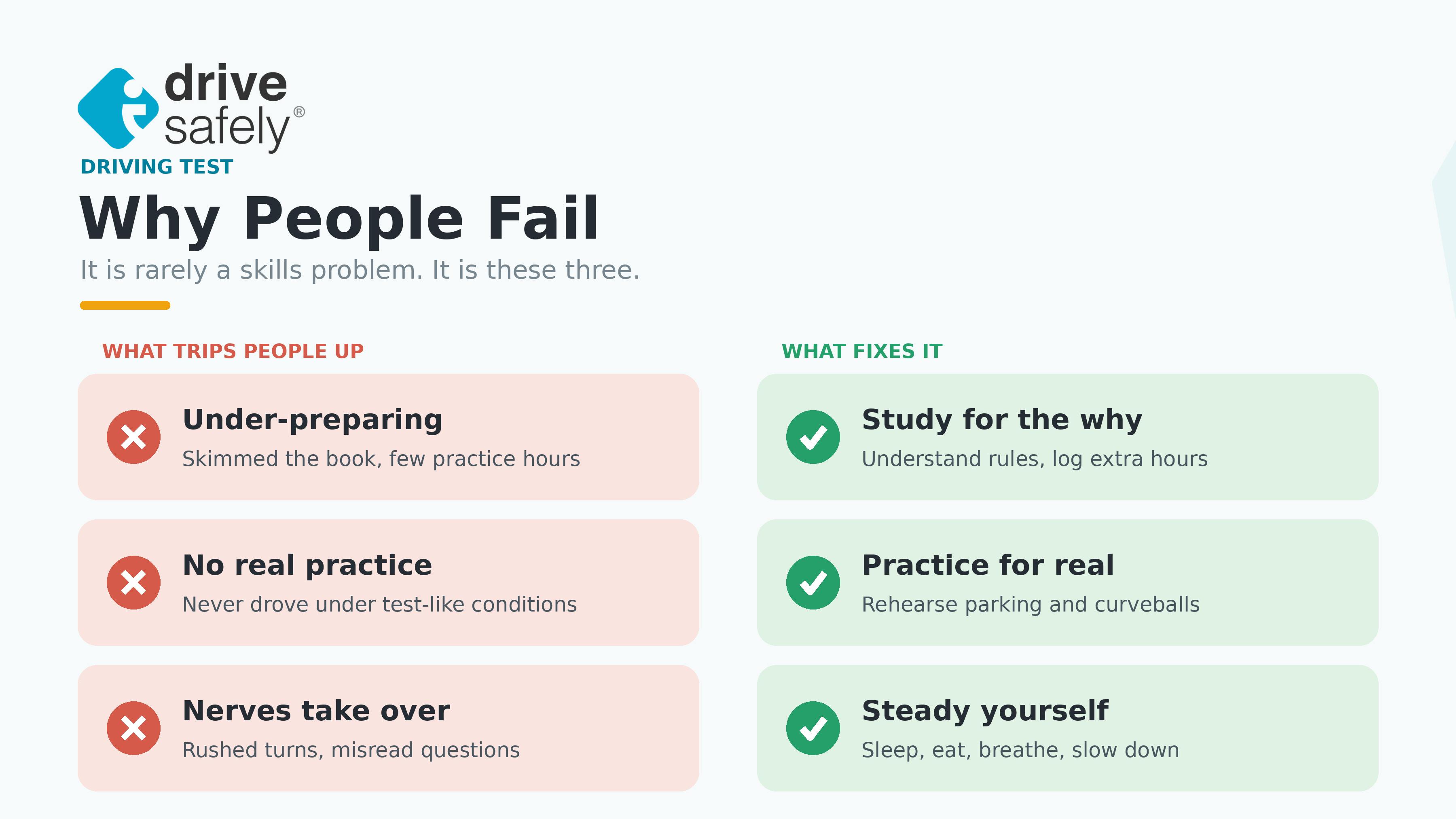
It usually is not a skills problem. Most first-try failures come down to under-preparing, never practicing under realistic conditions, and letting nerves take over on the day. The encouraging news is that all three are fully within your control, and the rest of this guide tackles each one.
How Should You Prepare in the Weeks Before?
Good preparation is layered. It is not just cramming the book; it is building real familiarity with how driving works long before test day.
Actually, study the Handbook
There is no way around it: you need to know the material. The upside is that your state handbook is short and much of it is common sense. Read it for understanding rather than rote memorization, because when you know why a rule exists, the answer holds up even when a question is worded in an unfamiliar way.
Learn as a Passenger
Every car ride is a free lesson if you pay attention. Instead of zoning out in the passenger seat, watch how right-of-way plays out at intersections, how early good drivers signal, and how they handle merges and school zones. You will absorb the rhythm of safe driving without even touching the wheel.
Go Well Past the Minimum Practice Hours
Your state sets a minimum number of supervised practice hours, but treat that as a floor, not a goal. The more time you log with a parent, guardian, or licensed adult, the more automatic your driving becomes. Every extra hour makes you calmer and more capable when it counts.
How Do You Keep Nerves From Sinking You?
Anxiety is one of the top reasons capable drivers fail, so managing it is part of the preparation, not an afterthought.
- Reframe the stakes. Millions of people hold licenses. You are almost certainly as capable as plenty of them. It is a test you can retake, not a one-shot verdict.
- Rest and fuel up. A good night's sleep and a real breakfast steady your focus far more than a last-minute cram.
- Slow down and breathe. On the day, read each question fully and take turns at a deliberate pace. Rushing is what turns nerves into mistakes.
Prepared Beats Nervous, Every Time.
Study smart, practice for real, and walk in ready. →

7 Surprising Signs of Aggressive Driving
What is the difference between being an assertive and aggressive driver? It's not simply to road rage or not to road rage. Not knowing can increase your insurance costs and possibly endanger lives. Are you constantly over the speed limit? Does yellow mean go faster? There are over 5 million car accidents annually. Know the facts. Drive safely. Enjoy the ride.

Tips To Pass Your DMV Behind-the-Wheel Test
Here are the necessary things you need to know to pass your DMV behind-the-wheel drivers license test.

5 Crazy Cases of Road Rage
We all get heated behind the wheel sometimes, but some drivers have let their anger turn dangerous. Here are five of the craziest road rage incidents we could find.
What Should You Expect on Exam Day?
Surprises fuel anxiety, so knowing the shape of the test defuses a lot of it. Expect the written portion to cover fundamentals like stopping distance, right-of-way, and legal limits. Expect the road portion to throw in a curveball or two, often a school zone or an area where the speed limit changes, to see whether you react appropriately. And expect to park the car, so practice your parking until it is second nature, because fumbling there can undo an otherwise strong test.
Why Does Your Choice of Course Matter?
Your preparation is only as strong as the program behind it. A bare-bones course might get you through the exam, but a well-built one makes you a genuinely safer, more confident driver, which shows on test day and every day after. Choosing an established course with a long track record takes the guesswork out of it. Our online drivers ed courses are built to prepare you thoroughly and let you learn at your own pace from any device, and you can warm up with a free practice test anytime.
For more, see our tactical guide to the behind-the-wheel road test, how to prep for the written permit test, and the full library of driving guides.
Looking for more driving resources?
Enter your email for deals, study materials, car maintenance tips, insurance savings, and more.